


Popular articles
- What Is Rivals of Aether? Game Type, Platforms, and Modes Explained
- Black Myth Wukong Guide – What To Expect From This Amazing New RPG
- Top 5 Gaming Thrones for a Luxurious Gaming Experience
- Is Sonic Triple Trouble 16-Bit Official? Who Is The Bad Guy in Sonic Triple Trouble?
- Among Us Original: Where and How To Play The Classic Game


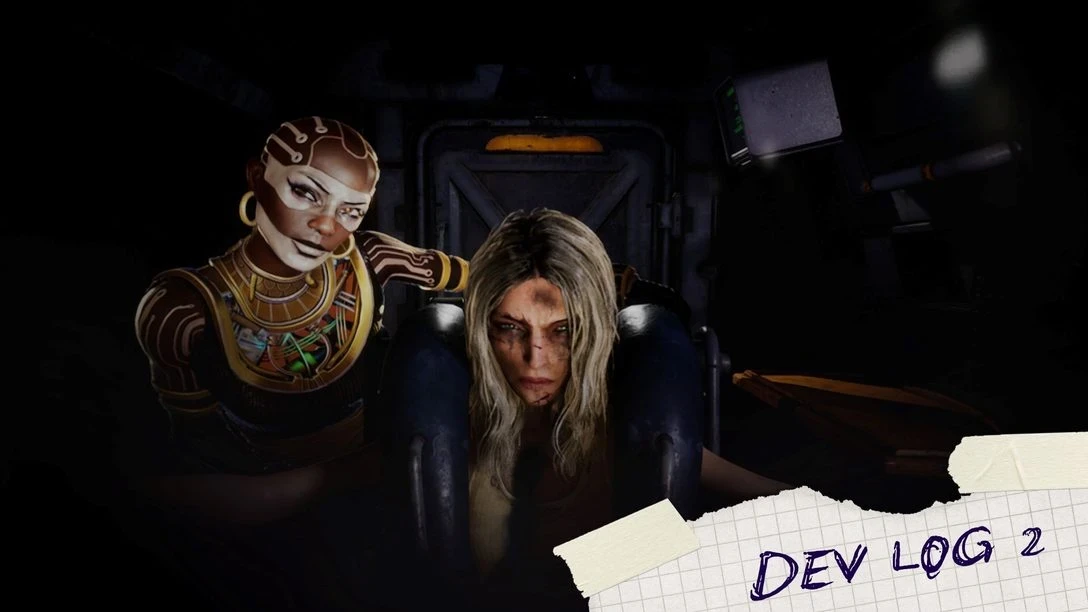
Judas dev log reveals “Judas Simulator” vision and living ship
Table of Content

Ghost Story Games has published a new developer update on Judas, focusing on how the team is building a dynamic, reactive narrative around a single, strongly defined protagonist. The studio frames the project not just as an FPS, but as a “Judas Simulator” – a game where systems let characters respond to even small player choices in real time. The setting, a multi-decade voyage aboard the Mayflower colony ship, is designed to show layers of history through environmental storytelling. Developers also outlined the tools and rulesets they use to assemble spaces systemically rather than by hand.
From design seed to a “Judas Simulator”

As with past Ken Levine projects, Judas grew from a single, central design idea – this time, a dynamic narrative driven by characters with competing goals. The team asked how to tell a fully realized story that reacts instantly to player behavior, then built systems to support that ambition. Over time, the pieces coalesced around Judas, a character who understands machines better than people, turning her talent into both a strength and a vulnerability.
Set aboard a robot-filled colony ship where conformity is prized for mission success, Judas’ nature puts her at odds with the world around her. The team eventually stopped thinking of the project as a traditional shooter – instead embracing the idea of a player inhabiting Judas, with story and systems circling back to that core identity.
A defined lead, not a cipher
Unlike the strangers-in-a-strange-land framing of BioShock’s Jack or Infinite’s Booker, Judas is native to the Mayflower and tied to the events that propel the plot. Testers reportedly began weighing decisions by asking, “What would Judas do?” – a sign, the team says, that players are engaging with her voice and history. That choice puts a more vocal, established protagonist in the player’s hands and widens the range of outcomes for her journey.
The Mayflower as a living archive
The Mayflower isn’t presented as a pristine, static location. It’s a generational ship decades into its voyage, reshaped by clashes between factions and ideals. The art direction aims to reveal layers of time and conflict – like a city built atop older streets – so exploration feels like peeling an onion of eras and agendas. As players discover more, they can make increasingly informed choices in the narrative.
This approach requires the world itself to be dynamic, not just the plot. The team is training systems with tagging and rules so the game can assemble believable spaces that serve storytelling and gameplay without relying solely on hand-authored layouts.
How spaces are assembled
Developers break down the ship into “puzzle pieces” and content buckets that the game can stitch together meaningfully. Living quarters are a clear example: from high-status areas to the ship’s underbelly, each category uses different geometry, materials, and flow to signal hierarchy and tone.
- VIP Pilgrim Quarters – expansive volumes, high ceilings, large windows, grand lobbies.
- Regular Pilgrim Dorms – more utilitarian spaces that balance function and legibility.
- Violator Quarters – the “lower, grungy” underbelly, accessed via the so‑called “Stairway to Hell” to emphasize physical and social separation.
Read also our article: PlayStation Blog opens voting on November’s best new game
In earlier projects, the studio would assemble areas by hand. Judas instead relies on a trusted ruleset to populate and adapt its interiors, aiming for replayable layouts that support the game’s reactive storytelling goals.
What the dev log confirms
- Core pillar: systemic, dynamic narrative with character reactions to small player choices.
- Protagonist: Judas – a defined, vocal character native to the Mayflower and central to the inciting events.
- Setting: a generational colony ship with layered history and factional conflict.
- Worldbuilding tools: environment assembly guided by tagging, content buckets, and hierarchy-aware rules.
- Design shift: conceived not merely as an FPS – the team refers to it as a “Judas Simulator.”
Selected developer commentary
“The project began with us wanting to tell stories that are less linear, that react to the player and unfold in ways that no one’s ever seen in one of Ken’s games.” – Drew Mitchell, Lead Narrative Designer
“I often come up with ideas when I’m out on runs, and one day I thought of this speech that would define this character that we were trying to figure out.” – Ken Levine, Studio President & Creative Director
“At the beginning of its journey, it was a more practical, conventional, modular starship. But over the course of its mission, due to conflict between factions of people and ideals, it’s changed into what you see now.” – Nathan Phail-Liff, Studio Art Director
System goals vs. implementation
The studio ties its narrative and level goals to concrete production methods. The table below sums up how design intent maps to tools and workflows.
Final take: why it matters
Judas is being built around systems-first storytelling – a defined lead character, a reactive cast, and a ship that changes through rules rather than hand placement. If the approach holds, players should see choices reflected both in people and places, turning each run into a conversation with Judas and the Mayflower itself.







Meet the Author



Article:
Read all


Solid Snake joins Rainbow Six Siege on March 3. Expect an intel-focused gadget, on-the-fly scavenging, a stealthy 4v4 event with Sam Fisher, and updates across maps and Operators.
 February 15, 2026
 85
85

A year-long Overwatch narrative lands on Switch. Season 1 opens the Reign of Talon, adds 5 heroes, and introduces a 5-week faction event—setting the stage for updates through Season 6 in 2026.
February 14, 2026
82
A new chapter in Kratos’ past arrives on PS5. Sons of Sparta shifts the series to 2D, exploring the Agoge with Deimos, classic Greek foes, skill trees, and Gifts of Olympus – all scored by Bear McCreary.
February 13, 2026
80

Assassin’s Creed Origins steps into the museum space as Ubisoft and the Musée de l’Homme unveil a nine-minute interactive walkthrough of ancient Egyptian embalming, part of the Mummies exhibition running November 2025 - May 2026.
February 13, 2026
77
Subscribe to “By-Gamers” on Telegram for gaming intel.
No filler, no fuss—just your daily XP boost. Hop in and level up, squad!


Read also
Solid Snake joins Rainbow Six Siege on March 3. Expect an intel-focused gadget, on-the-fly scavenging, a stealthy 4v4 event with Sam Fisher, and updates across maps and Operators.
February 15, 2026
85
A year-long Overwatch narrative lands on Switch. Season 1 opens the Reign of Talon, adds 5 heroes, and introduces a 5-week faction event—setting the stage for updates through Season 6 in 2026.
February 14, 2026
82
A new chapter in Kratos’ past arrives on PS5. Sons of Sparta shifts the series to 2D, exploring the Agoge with Deimos, classic Greek foes, skill trees, and Gifts of Olympus – all scored by Bear McCreary.
February 13, 2026
80
Assassin’s Creed Origins steps into the museum space as Ubisoft and the Musée de l’Homme unveil a nine-minute interactive walkthrough of ancient Egyptian embalming, part of the Mummies exhibition running November 2025 - May 2026.
February 13, 2026
77

High On Life 2 is out now, and its writers say the best gags start with the team cracking up first — then shaping bits so players help drive the punchlines. Here’s how Squanch approaches humor-by-design.
February 13, 2026
61

Rainbow Six Siege’s competitive year ends in Paris with a new twist: 1V1 NOW by Xbox Game Pass. Four regional standouts, 3.2k sign-ups behind them, clash Feb 14-15 for a share of $5,000 on the SI stage.
February 13, 2026
70

Fourteen Xbox titles arrive February 17-20 – from Star Trek: Voyager’s survival strategy to stealth in Styx and horror in Backrooms. Dates, platform notes, and core gameplay features inside.
February 13, 2026
63

Rayman’s 1995 debut returns in a multi-version package – with a first-ever playable SNES prototype, 120 bonus stages, a reimagined Christophe Héral soundtrack, and modern assists like a 60-second rewind.
February 13, 2026
62
Mario Tennis Fever icon elements arrive on a ticking schedule—four waves across February-March 2026. Here are the exact PT dates, how to access them, and what the game brings to the court.
February 13, 2026
68

Nintendo serves up Mario Tennis Fever on Switch 2 with its biggest roster yet, 30 new Fever Rackets that twist rallies in wild ways, and a baby-themed Adventure Mode. Check the official trailer link inside.
February 13, 2026
67

Співпраця
Співпраця - текст
By-Gamers Newsletter!
Unlock special gaming deals, limited-time bundles, and more - sign up for By-gamers newsletter today!
