


Popular articles
- What Is Rivals of Aether? Game Type, Platforms, and Modes Explained
- Black Myth Wukong Guide – What To Expect From This Amazing New RPG
- Top 5 Gaming Thrones for a Luxurious Gaming Experience
- Is Sonic Triple Trouble 16-Bit Official? Who Is The Bad Guy in Sonic Triple Trouble?
- Among Us Original: Where and How To Play The Classic Game


CarbonXmade moves CCU from lab to shelves with new product trio
Table of Content

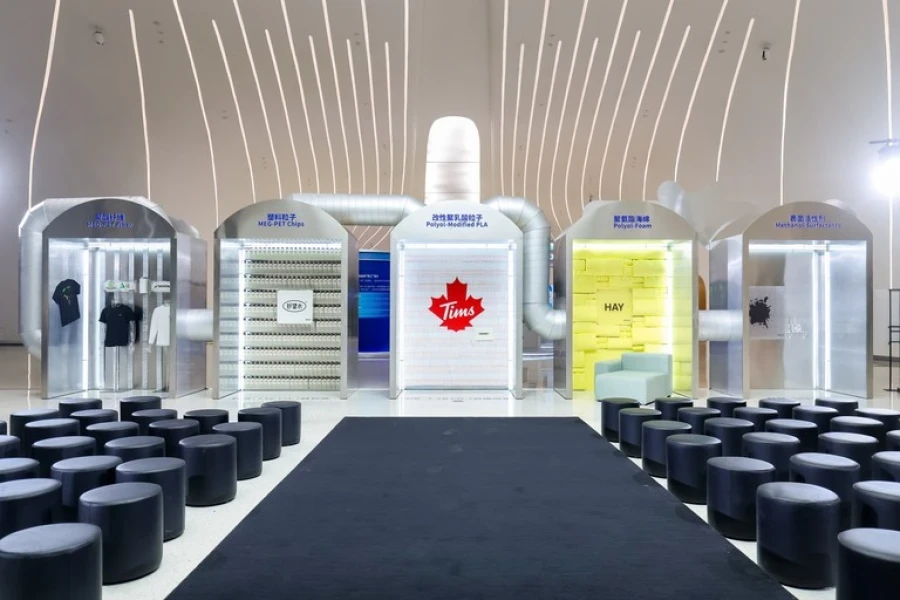
The Tencent-led CarbonXmade program used the Sustainable Social Value Innovation Summit on December 3 to show how captured carbon can become usable materials – not just a waste stream. The initiative focuses on Carbon Capture and Utilization, pairing brands with tech developers to shortcut the so‑called “valley of death” between prototypes and retail. At the event, partners HAY, Tims China, and Sasol presented three concrete outcomes. The lineup includes a sofa built with CO₂-derived foam, biodegradable straws produced from captured carbon, and an industrial surfactant demonstrating scalability. The message was straightforward – carbon can be re-routed into products, not only kept out of the air.
What CarbonXmade is trying to fix
CCU has long promised new materials made from emissions, but costs, scattered supply chains, and low awareness have slowed adoption. CarbonXmade positions itself as an ecosystem connector, linking brands and decarbonization startups to accelerate prototyping and delivery. The aim is to move tangible goods to market faster, aligning consumer products and industrial inputs with Net Zero roadmaps.
What launched and where it fits
Three examples were highlighted – each addressing a different part of the value chain, from home to lifestyle to industrial use.
- HAY – Furniture: The HAY Mags Sofa in carbon-sequestering foam replaces conventional petroleum-based foam with a CCU-derived alternative, while targeting high-end design standards.
- Tims China – Lifestyle: Customers at around 400 locations will receive CO₂-based biodegradable straws that mimic the feel of polylactic acid versions.
- Sasol – Industrial: A CO₂-based surfactant was introduced with potential applications including car wash, textile treatment, and coatings – signaling industrial scalability.
Quick reference – Product overview
Below is a concise look at the three items revealed, their category, and how CCU is applied. This table summarizes availability and intended use without marketing claims.
| Brand | Category | CCU element | Status |
| HAY | Furniture (Sofa) | CO₂-derived foam replacing petroleum-based foam | Launched at the summit |
| Tims China | Lifestyle (Straws) | Biodegradable straws made using captured carbon | Available at around 400 locations |
| Sasol | Industrial (Surfactant) | CO₂-based surfactant for multiple applications | Introduced to demonstrate scalability |
Read also our article: Inside S Summit 2025 – how AI, ethics and youth shaped the agenda
Video – Event highlight
Official video from the summit is available here:
From emissions to inputs – why this matters
The debut of these products signals a practical shift: captured CO₂ can re-enter the supply chain as a resource. By presenting a consumer sofa, food-service straws, and an industrial surfactant, CarbonXmade connects lab innovation with everyday use. For anyone tracking sustainable tech – including players in hardware, peripherals, and manufacturing – the takeaway is clear: decarbonization will rely on materials you can actually buy, ship, and use, not just pilot projects.
: The launch shows a path where cutting emissions also builds new materials. Expect more crossovers where everyday products and industrial inputs are designed with what we capture – not just what we extract.







Meet the Author



Article:
Read all


Solid Snake joins Rainbow Six Siege on March 3. Expect an intel-focused gadget, on-the-fly scavenging, a stealthy 4v4 event with Sam Fisher, and updates across maps and Operators.
 February 15, 2026
 85
85

A year-long Overwatch narrative lands on Switch. Season 1 opens the Reign of Talon, adds 5 heroes, and introduces a 5-week faction event—setting the stage for updates through Season 6 in 2026.
February 14, 2026
82
A new chapter in Kratos’ past arrives on PS5. Sons of Sparta shifts the series to 2D, exploring the Agoge with Deimos, classic Greek foes, skill trees, and Gifts of Olympus – all scored by Bear McCreary.
February 13, 2026
80
Assassin’s Creed Origins steps into the museum space as Ubisoft and the Musée de l’Homme unveil a nine-minute interactive walkthrough of ancient Egyptian embalming, part of the Mummies exhibition running November 2025 - May 2026.
February 13, 2026
77
Subscribe to “By-Gamers” on Telegram for gaming intel.
No filler, no fuss—just your daily XP boost. Hop in and level up, squad!


Read also

Remedy’s new video tours a warped Manhattan built around expansive zones, side activities and secrets. Gravity Anomalies bend physics as Dylan Faden hunts a powerful Resonant. Release planned in 2026 across major platforms.
February 13, 2026
66

Four days, 500,000 revives, one universal skin. Borderlands 4’s co-op Community Challenge sets a clear goal for Feb 12-15, with a new Weekly Big Encore slate designed to test your survival skills.
February 13, 2026
69

Step inside Firaxis’ studio as the audio team and Grammy-winning composer Christopher Tin unpack how Civilization VII’s sweeping soundtrack—and main theme Live Gloriously—aims to reflect eras and cultures across history.
February 12, 2026
69

WWE 2K26 swaps traditional DLC packs for a seasonal Ringside Pass. Expect six drops through 2026, a free track for all players, and premium tiers with DLC Superstars. Season 1 begins March 6 – and earlier access to post-launch ...
February 11, 2026
79

WWE 2K26 locks its March rollout and brings back brutal stipulations, heavier combat physics, and granular AI tools – alongside a new commentary lineup and more interactive entrances.
February 11, 2026
67

CM Punk fronts WWE 2K26’s Showcase – a career-spanning mode mixing real matches, dream pairings, and alternate timelines – and a fresh Gauntlet that unlocks every Showcase reward if you can run the 20-opponent table.
February 11, 2026
61

Weekly ‘Mafia Mondays’ will reveal early‑1900s Sicily – from a tense villa infiltration to a three‑hour hands‑on – as 2K and Hangar 13 detail scope, tech, and the family around Enzo Favara.
February 11, 2026
64

Riot scales back the 2XKO team, citing lower-than-needed momentum beyond a core audience. Improvements are planned, 2026 esports stays intact, and affected staff receive at least 6 months of notice pay and severance.
February 9, 2026
72

After adding Photo Mode in November’s Free Ride Update, Mafia: The Old Country showcases fan-made shots—complete with insights from the art team on composition, lighting, and world-building.
February 7, 2026
87

DLC Pack 2 lands in SUPER ROBOT WARS Y with five new units and dozens of missions, while a free update introduces Battle Rush 2, higher level caps, and deeper upgrades across pilots, mechs, and weapons.
February 7, 2026
92

Співпраця
Співпраця - текст
By-Gamers Newsletter!
Unlock special gaming deals, limited-time bundles, and more - sign up for By-gamers newsletter today!
